|
|

| UNCONFIRMED |
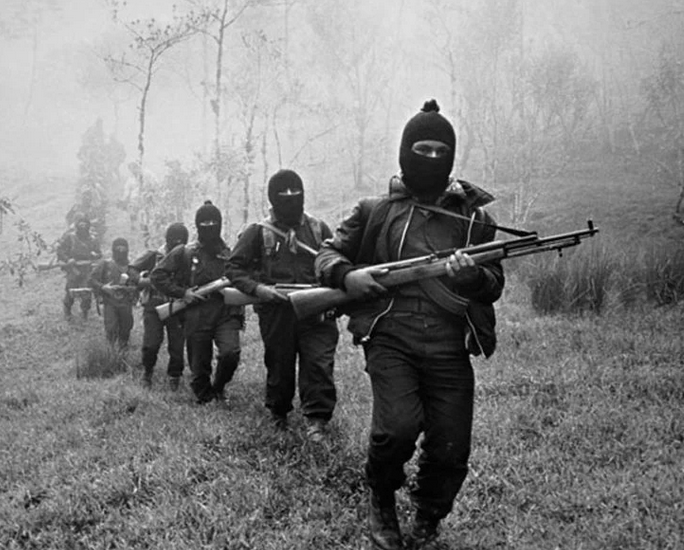
32 Year Anniverary of Zapatista Uprising by Stop ICE Alerts Network DEC 31, 2025 updated 13:44:52 PST FRI JAN 2, 2026 The Zapatistas rose up on January 1, 1994, just over three decades ago. They remain an inspiration for social movements, communities, and individuals seeking change around the world. This is episode 83 of Stories of Resistance. On January 1, 1994, Indigenous peoples from Chiapas, Mexico, rose up. They took control of city halls in towns across the state. They took the state capital San Cristobal de las Casas. And they held them for days, despite a violent response from Mexico’s US-backed military. This was not just any movement confined to the mountainous jungles of Mexico. It was an Indigenous uprising against injustice. An uprising against neoliberalism. An uprising against globalization and free trade agreements, and it would have deep reverberations. Inspiring people, not just in Mexico, but around the world.
And this was not just any movement confined to the mountainous jungles of Mexico. It was an Indigenous uprising against injustice. An uprising against neoliberalism. An uprising against globalization and free trade agreements, and it would have deep reverberations… Inspiring people, not just in Mexico, but around the world. See… January 1, 1994 was not just the day of the Zapatista uprising. It was also the day that NAFTA — The North America Free Trade Agreement — would go into effect. That was not a coincidence. They chose that day because NAFTA was already destined to push privatizations, eliminate rural jobs and rip the land from as many as 2 million small farmers over the coming years. NAFTA’s free market agenda was created to deepen neoliberalism in favor big, powerful, and largely U.S. corporations. And they knew it.
“Today, we say, Basta — ENOUGH IS ENOUGH”, the Zapatista leader Subcommandante Marcos said in the first Declaration of the Lacandona Jungle. “We are a product of 500 years of struggle: first against slavery, then during the War of Independence against Spain led by insurgents, then to avoid being absorbed by North American imperialism.” “To the People of Mexico,” We, the men and women, full and free, are conscious that the war that we have declared is our last resort, but also a just one. The dictators are applying an undeclared genocidal war against our people for many years. Therefore we ask for your participation, your decision to support this plan that struggles for work, land, housing, food, health care, education, independence, freedom, democracy, justice and peace. We declare that we will not stop fighting until the basic demands of our people have been met by forming a government of our country that is free and democratic.” The EZLN, or Zapatista National Liberation Front, held cities for almost two weeks, but the Mexican military responded with widespread violence — an unrelenting assault, killing dozens of Indigenous members of the uprising. A hundred thousand people protested in Mexico City against the government’s repression. The Zapatistas were much more than a guerrilla army. They were, and still are, a political movement. A movement based on Indigenous communal and collective organizing and control. And this was just the beginning. Read more at TheRealNews.com
|
|
|
|
|
system status
|
| (v2.3) |
 Stop ICE Alerts

 UNCONFIRMED reports are intended to gather more information before being labeled CONFIRMED- which is why these comments exist as a crowd sourcing tool for
additional feedback.
UNCONFIRMED reports are intended to gather more information before being labeled CONFIRMED- which is why these comments exist as a crowd sourcing tool for
additional feedback.